A free trial lesson is available to assess the student’s Quran reading and recitation level, meet the teacher, and develop an initial learning plan tailored to the student’s needs.
All Levels
اللغة العربية لغير الناطقين بها – للكبار
Arabic for Non-Arabic Speakers I Adults
Arabic Courses
A structured Arabic language program designed for adult learners who do not speak Arabic as their first language. The course provides a practical and personalized introduction to Modern Standard Arabic through one-to-one online lessons. Students gradually develop the four essential language skills: listening, speaking, reading, and writing, while building a useful vocabulary and learning basic grammar and everyday communication. The course can also support students who want to understand the Arabic language used in the Quran and Islamic studies. Lessons are tailored to each student's goals, current level, learning pace, and personal needs.
5.0 (614)
1,248
6–9 months
2-3 sessions/week
60
All Time Zones
Certified Teacher
Female Option Available
All Time Zones
Arabic for Non-Arabic Speakers – Adults
What You Will Learn
- Recognize and write the Arabic alphabet.
- Pronounce Arabic letters and common Arabic sounds correctly.
- Read Arabic words and simple sentences.
- Understand basic Arabic vowel marks and pronunciation patterns.
- Introduce themselves and provide basic personal information.
- Use common everyday Arabic expressions.
- Ask and answer simple questions.
- Build basic Arabic sentences.
- Understand essential Arabic grammar concepts.
- Use vocabulary related to everyday life, family, work, travel, food, and communication.
- Understand simple spoken Arabic in familiar situations.
- Write simple words, sentences, and short messages.
- Read short and simple Arabic texts.
- Communicate in basic Arabic with greater confidence.
- Build a strong foundation for Intermediate Arabic.
- Develop a foundation for further study of Quranic and Islamic Arabic.
Who This Course Is For
- Adults who are complete beginners in Arabic.
- Non-Arabic speakers who want to learn Arabic from the beginning.
- Muslims who want to understand Arabic used in Islamic contexts.
- Quran students who want to understand the meaning of Arabic vocabulary.
- Reverts to Islam beginning their Arabic learning journey.
- Adults preparing for Quranic Arabic studies.
- Students who want to communicate in Arabic during travel or everyday situations.
- Anyone looking for personalized one-to-one Arabic lessons online.
Prerequisites
- Students only need:
- A reliable internet connection.
- A computer, tablet, or smartphone.
- A notebook and pen.
- Basic ability to participate in an online lesson.
- Willingness to learn and practice regularly.
Certificate
- Arabic for Non-Arabic Speakers – Adults Completion Certificate
- The certificate recognizes the student's successful completion of the Beginner Arabic program and readiness to continue to the Intermediate Arabic Level.
- Important: This is a course completion certificate and is not an academic degree or formal language qualification.
Course Details
6–9 months
Duration
2-3
Sessions/Week
60
Session Length
All Levels
Level
Explore More Courses
View all
Course Curriculum
10 modules · 59 lessons- Lesson 1: Introduction to the Arabic Language
- Lesson 2: Arabic Letters and Their Shapes
- Lesson 3: Similar Arabic Letters and Their Differences
- Lesson 4: Correct Pronunciation and Letter Articulation
- Lesson 5: Arabic Writing Practice
- Lesson 1: Short Vowels – Fatha, Kasra, and Damma
- Lesson 2: Long Vowels – Alif, Waw, and Ya
- Lesson 3: Sukoon
- Lesson 4: Shaddah
- Lesson 5: Tanween and Basic Pronunciation Practice
- Lesson 1: Reading Arabic Letters
- Lesson 2: Reading Connected Letters
- Lesson 3: Reading Simple Arabic Words
- Lesson 4: Forming and Writing Words
- Lesson 5: Reading Simple Sentences
- Lesson 1: Greetings and Introductions
- Lesson 2: Family and Relationships
- Lesson 3: Numbers, Dates, and Time
- Lesson 4: Colors, Shapes, and Descriptions
- Lesson 5: Food and Drinks
- Lesson 6: Home and Daily Life
- Lesson 7: Work and Common Activities
- Lesson 8: Travel and Transportation
- Lesson 1: Introducing Yourself
- Lesson 2: Asking and Answering Basic Questions
- Lesson 3: Talking About Daily Activities
- Lesson 4: Expressing Likes, Dislikes, and Preferences
- Lesson 5: Making Simple Requests
- Lesson 6: Everyday Conversations
- Lesson 1: Personal Pronouns
- Lesson 2: Masculine and Feminine
- Lesson 3: Singular and Plural
- Lesson 4: Demonstrative Pronouns
- Lesson 5: Definite and Indefinite Nouns
- Lesson 6: Basic Adjectives
- Lesson 7: Simple Verbs and Verb Sentences
- Lesson 8: Question Words
- Lesson 1: Understanding Common Arabic Expressions
- Lesson 2: Listening to Simple Conversations
- Lesson 3: Responding to Everyday Questions
- Lesson 4: Describing People, Places, and Objects
- Lesson 5: Guided Arabic Conversations
- Lesson 6: Building Speaking Confidence
- Lesson 1: Common Quranic Arabic Vocabulary
- Lesson 2: Basic Islamic Expressions
- Lesson 3: Common Words Used in Islamic Studies
- Lesson 4: Understanding Simple Quranic Expressions
- Lesson 5: Connecting Arabic Vocabulary with Quranic Meaning
- Lesson 1: Reading Short Arabic Texts
- Lesson 2: Understanding Simple Written Sentences
- Lesson 3: Writing Simple Sentences
- Lesson 4: Dictation and Spelling Practice
- Lesson 5: Writing Short Paragraphs
- Lesson 1: Comprehensive Vocabulary Review
- Lesson 2: Reading Assessment
- Lesson 3: Writing Assessment
- Lesson 4: Listening Assessment
- Lesson 5: Speaking Assessment
- Lesson 6: Final Evaluation and Preparation for Intermediate Arabic
Your Course Teacher
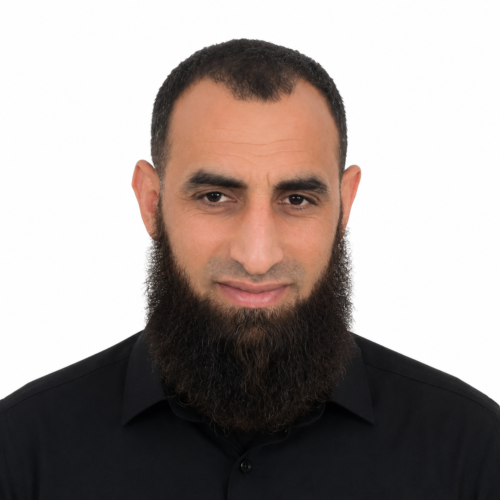
Sheikh Abdelrahman El-Sayed Abu El-Ata
Chairman of the Board
Sheikh Abdelrahman El-Sayed Abu El-Ata is the Founder and Chairman of the Board of Wahion Youha Academy, with 21 years of experience in Quranic and Islamic education.
View Teacher Profile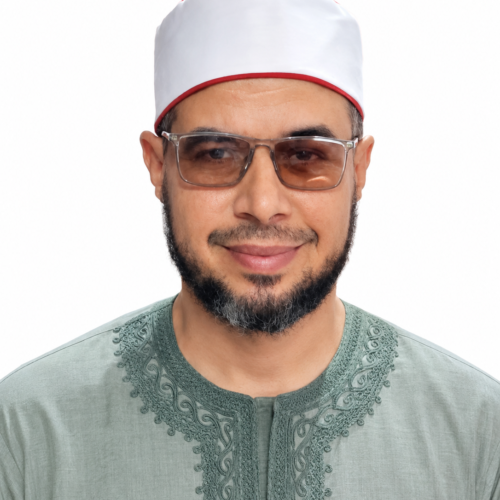
Sheikh Azeez Mohammed Hassan Zena
Senior Quran & Tajweed Instructor
Sheikh Azeez Mohammed Hassan Zena has 16 years of experience teaching the Holy Quran. He began teaching at Al-Azhar Al-Sharif in 2006 and started teaching Quran online in 2010, gaining extensive experience in both traditional and online Quran education. He…
View Teacher Profile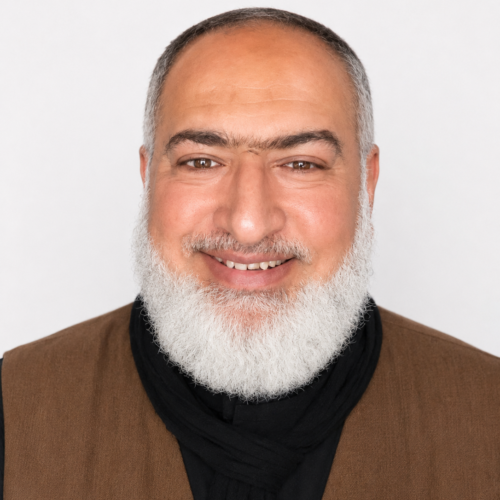
Ustadh Alsayed Mohammed Altonamly
Senior Arabic, Qur'an & Tajweed Instructor
Ustadh Alsayed Mohammed Altonamly is an experienced Arabic, Qur'an, and Tajweed instructor with approximately 25 years of teaching experience. He graduated from the Faculty of Dar Al Uloom at Cairo University, Fayoum Branch, where Arabic Language and Islamic Sciences formed…
View Teacher Profile
Ustadha Amany Mostafa Yuones
Quran & Tajweed Teacher
Ustadha Amany Mostafa Yuones is a dedicated Quran and Tajweed teacher with 7 years of teaching experience, including 3 years of practical experience working at a specialized Quran memorization center. She graduated from the Faculty of Education and holds an…
View Teacher Profile
Ustadha Doaa Bahgat Gouda Fouad
Quran & Tajweed Instructor
Ustadha Doaa Bahgat Gouda Fouad is a Quran and Tajweed instructor with 12 years of teaching experience. She has experience teaching both Arabic and non-Arabic speakers and specializes in Quran recitation, Tajweed, Quran reading correction, and Noorani Qaida. She holds…
View Teacher Profile
Ustadha Lamiaa Abdelfattah Mohamed
Senior Quran & Tajweed Instructor
Ustadha Lamiaa Abdelfattah Mohamed Gamil is a Senior Quran & Tajweed Instructor with 10 years of successful online teaching experience. She combines her academic background with a deep and lifelong connection to the Holy Quran. She graduated with a Bachelor's…
View Teacher Profile
Ustadha Manal Ahmed Mostafa Salama
Quran & Arabic Language Supervisor and Teacher
Ustadha Manal Ahmed Mostafa Salama is a Quran and Arabic language teacher and supervisor with 11 years of teaching experience, specializing in Quran education and Arabic for non-Arabic speakers. She holds a Master’s Degree in Arabic Language Curriculum and Teaching…
View Teacher ProfileFAQs
Yes. The course includes an introduction to common Quranic and Islamic vocabulary. However, Modern Standard Arabic and Quranic Arabic are not identical, so students who want deeper Quranic understanding may benefit from a specialized Quranic Arabic course after building their foundation.
Yes. The course includes practical conversation activities covering introductions, everyday situations, questions, requests, preferences, and common communication.
Yes. The main focus is Modern Standard Arabic (MSA), providing students with a structured foundation in reading, writing, speaking, listening, vocabulary, and grammar.
No. Students can begin with the Arabic alphabet and gradually develop their reading skills throughout the course.
Yes. The course starts from the Arabic alphabet, pronunciation, and basic vocabulary, making it suitable for adults with little or no previous Arabic knowledge.