A free trial lesson is available to assess the student’s Quran reading and recitation level, meet the teacher, and develop an initial learning plan tailored to the student’s needs.
Intermediate
تفسير القرآن الكريم – المستوى المتوسط
Quran Tafseer Course – Intermediate
Quran Courses
A structured intermediate-level Quran Tafseer course designed for students who already have a basic understanding of Quranic meanings and want to develop a deeper and more systematic understanding of the Quran. The course explores the meanings, themes, context, and guidance of selected Surahs and verses in greater detail. Students are introduced to relevant Quranic vocabulary, connections between verses, reasons for revelation, Quranic stories, and selected explanations from recognized Tafseer sources. The course also develops students' ability to reflect on Quranic guidance and connect its teachings with faith, character, family, society, and everyday life. Lessons are delivered through personalized one-to-one online sessions, allowing the teacher to adapt the pace, selected Surahs, and depth of study to each student's background and learning goals.
4.5 (36)
1,350
9-12 Months
2-3 sessions/week
45-60
All Time Zones
Certified Teacher
Female Option Available
All Time Zones
Quran Tafseer – Intermediate Certificate of
What You Will Learn
- Understand the detailed meanings of selected Quranic verses and Surahs.
- Expand their Quranic vocabulary and understanding of Quranic expressions.
- Identify the central themes and messages of selected Surahs.
- Understand the relationship between related verses within a Surah.
- Recognize relevant historical and contextual background.
- Understand selected reasons for revelation and their relevance to the verses.
- Explore Quranic stories and identify their main lessons and guidance.
- Study selected explanations from recognized Tafseer sources.
- Compare explanations of selected verses at an introductory level.
- Develop stronger Tadabbur and reflection skills.
- Extract practical guidance from Quranic teachings.
- Connect Quranic guidance to personal, family, and social life.
- Develop the ability to discuss and explain basic Quranic meanings.
- Build a strong foundation for advanced Quran Tafseer study.
Who This Course Is For
- Students who have completed a Beginner Quran Tafseer course.
- Students with basic knowledge of Quranic meanings and vocabulary.
- Quran memorization students who want deeper understanding of the verses they memorize.
- Adults who want to study Quran Tafseer in a structured way.
- Students of Islamic Studies seeking stronger Quranic understanding.
- Learners who can read the Quran confidently and want to explore its meanings in greater depth.
- Students preparing to progress to an Advanced Quran Tafseer course.
Prerequisites
- Have completed the Quran Tafseer – Beginner level or equivalent study.
- Be able to read the Quran confidently.
- Have a basic understanding of Quranic vocabulary and meanings.
- Have basic knowledge of Islamic beliefs and practices.
- Be familiar with the general concept of Quran Tafseer.
- Advanced Arabic knowledge is not required, although students with stronger Arabic skills may benefit from additional linguistic explanations.
- An initial assessment can be used to determine whether the Intermediate level is appropriate.
Certificate
- Quran Tafseer – Intermediate Certificate of Completion
- The certificate recognizes the student's successful completion of the Intermediate Tafseer program and progress in understanding Quranic meanings, themes, context, and guidance.
- Important: This is a course completion certificate and is not an Ijazah, academic degree, or specialized qualification in Tafseer.
Course Details
9-12 Months
Duration
2-3
Sessions/Week
45-60
Session Length
Intermediate
Level
Explore More Courses
View all
Course Curriculum
10 modules · 62 lessons- Lesson 1: Review of Basic Tafseer Concepts
- Lesson 2: Sources Used in Quran Tafseer
- Lesson 3: Understanding the Context of Quranic Verses
- Lesson 4: Introduction to Asbab An-Nuzul
- Lesson 5: Understanding the Difference Between Tafseer and Personal Reflection
- Lesson 1: Identifying the Main Theme of a Surah
- Lesson 2: Understanding the Relationship Between Verses
- Lesson 3: Connecting Different Sections of a Surah
- Lesson 4: Understanding the Beginning and Ending of a Surah
- Lesson 5: Identifying the Central Message of a Surah
- Lesson 1: Characteristics of Makkan Revelation
- Lesson 2: Tawheed and the Oneness of Allah
- Lesson 3: Prophethood and Revelation
- Lesson 4: Resurrection and the Hereafter
- Lesson 5: The Relationship Between Faith and Character
- Lesson 6: Lessons from Selected Makkan Surahs
- Lesson 1: Characteristics of Madinan Revelation
- Lesson 2: Building a Believing Community
- Lesson 3: Family and Social Responsibilities
- Lesson 4: Justice and Ethical Conduct
- Lesson 5: Relations With Others
- Lesson 6: Lessons from Selected Madinan Surahs
- Lesson 1: Why Scholars Use Different Tafseer Sources
- Lesson 2: Introduction to Tafseer Ibn Kathir
- Lesson 3: Introduction to Tafseer At-Tabari
- Lesson 4: Introduction to Tafseer As-Sa'di
- Lesson 5: Studying Different Explanations of Selected Verses
- Lesson 6: Identifying the Main Points of Agreement and Difference
- Lesson 1: The Story of Adam عليه السلام
- Lesson 2: The Story of Ibrahim عليه السلام
- Lesson 3: The Story of Yusuf عليه السلام
- Lesson 4: The Story of Musa عليه السلام
- Lesson 5: The Story of Maryam عليها السلام
- Lesson 6: Understanding Repeated Themes in Quranic Stories
- Lesson 7: Extracting Lessons and Guidance from the Stories
- Lesson 1: Sincerity and Purification of the Heart
- Lesson 2: Patience and Perseverance
- Lesson 3: Gratitude and Recognizing Allah's Blessings
- Lesson 4: Forgiveness and Controlling Anger
- Lesson 5: Justice and Fairness
- Lesson 6: Honesty and Trustworthiness
- Lesson 7: Good Character and Social Responsibility
- Lesson 1: The Quran and Family Relationships
- Lesson 2: The Quran and Raising Children
- Lesson 3: The Quran and Marriage
- Lesson 4: Business, Wealth, and Financial Ethics
- Lesson 5: Community and Social Responsibility
- Lesson 6: Dealing With Difficulties and Tests
- Lesson 7: Applying Quranic Guidance in Modern Life
- Lesson 1: Reading Beyond the Surface Meaning
- Lesson 2: Identifying Repeated Quranic Concepts
- Lesson 3: Connecting Verses With Related Verses
- Lesson 4: Extracting Guidance From Context
- Lesson 5: Asking the Right Questions When Studying a Verse
- Lesson 6: Writing and Presenting Quranic Reflections
- Lesson 1: Review of Tafseer Principles
- Lesson 2: Review of Quranic Themes and Vocabulary
- Lesson 3: Selected Verse Analysis
- Lesson 4: Tafseer Source Comparison Exercise
- Lesson 5: Tadabbur and Reflection Exercise
- Lesson 6: Final Assessment
- Lesson 7: Preparing for Advanced Quran Tafseer Study
Your Course Teacher
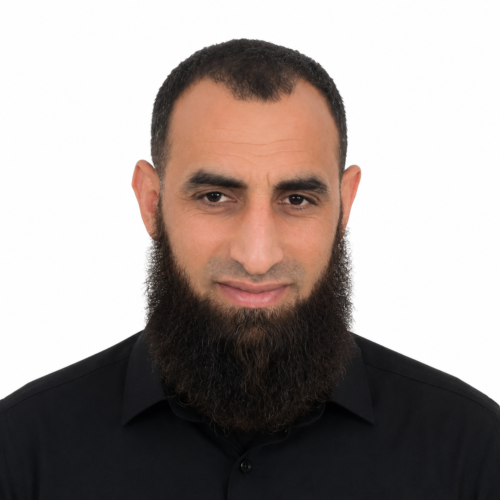
Sheikh Abdelrahman El-Sayed Abu El-Ata
Chairman of the Board
Sheikh Abdelrahman El-Sayed Abu El-Ata is the Founder and Chairman of the Board of Wahion Youha Academy, with 21 years of experience in Quranic and Islamic education.
View Teacher Profile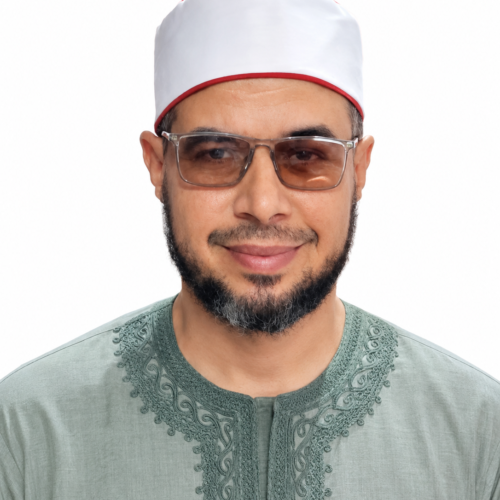
Sheikh Azeez Mohammed Hassan Zena
Senior Quran & Tajweed Instructor
Sheikh Azeez Mohammed Hassan Zena has 16 years of experience teaching the Holy Quran. He began teaching at Al-Azhar Al-Sharif in 2006 and started teaching Quran online in 2010, gaining extensive experience in both traditional and online Quran education. He…
View Teacher Profile
Sheikh Hussein Muhammad Ahmed
Senior Quran & Tajweed Instructor
Hussein Muhammad Ahmed graduated from Al-Azhar University in 2019 with a Bachelor's degree from the Faculty of Languages and Translation, Department of Islamic Studies. He has memorized the Holy Qur'an and holds an Ijazah in the narration of Hafs 'an…
View Teacher Profile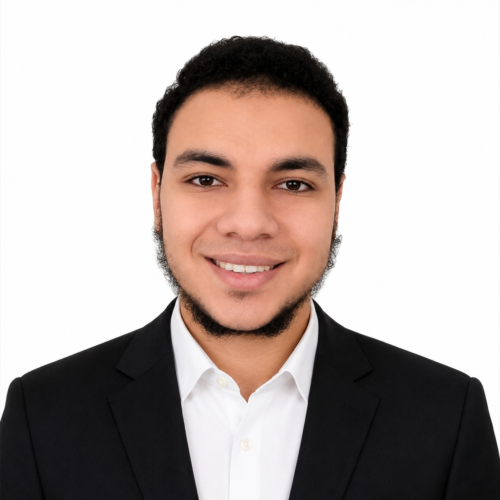
Sheikh Mohammed Said Abbas
Tajweed Instructor
Sheikh Mohammed Said Abbas is a Tajweed instructor with more than two years of experience teaching Noor Al-Bayan, Tajweed, and the Holy Quran. He is a student of Quranic readings at Al-Azhar University, where he focuses on the study and…
View Teacher Profile
Ustadh Ahmed Esayed Sedeek
Quran & Tajweed Instructor
Ustadh Ahmed Esayed Sedeek is an experienced educator with a long background in teaching. He has worked as an English teacher at Al-Azhar Al-Sharif since 2010 and has also been teaching Quran memorization since 2021. He is passionate about teaching…
View Teacher Profile
Ustadha Amany Mostafa Yuones
Quran & Tajweed Teacher
Ustadha Amany Mostafa Yuones is a dedicated Quran and Tajweed teacher with 7 years of teaching experience, including 3 years of practical experience working at a specialized Quran memorization center. She graduated from the Faculty of Education and holds an…
View Teacher Profile
Ustadha Eman Mahmoud Tawfik
Quran & Tajweed Instructor
Eman Mahmoud Tawfik is a dedicated Quran and Tajweed teacher with 10 years of teaching experience. She holds a Bachelor’s degree in Specific Education and an Ijazah in the Holy Quran with the narration of Hafs ‘an Asim, in addition…
View Teacher Profile
Ustadha Iman Ibrahim Abdel Latif El-Saadawy
Quran, Qira'at & Islamic Studies Teacher
Ustadha Iman Ibrahim Abdel Latif El-Saadawy is an experienced Quran and Qira'at teacher with 16 years of teaching experience. She specializes in teaching the Holy Quran, Quranic recitations, and Islamic studies. She has studied at a Qira'at Institute, specializing in…
View Teacher Profile
Ustadha Manal Ahmed Mostafa Salama
Quran & Arabic Language Supervisor and Teacher
Ustadha Manal Ahmed Mostafa Salama is a Quran and Arabic language teacher and supervisor with 11 years of teaching experience, specializing in Quran education and Arabic for non-Arabic speakers. She holds a Master’s Degree in Arabic Language Curriculum and Teaching…
View Teacher Profile
Ustadha Manar Mosaad Abdulhakeem
Arabic Tutor | Islamic Studies & Qur’an Teacher
Ustadha Manar Mosaad Abdulhakeem At-Tantawy is an Arabic tutor, Islamic Studies teacher, and Qur’an instructor with 6 years of teaching experience. She specializes in teaching Arabic, Islamic Studies, Qur’an recitation, and Tajweed to both children and adults. She holds a…
View Teacher ProfileFAQs
Yes. Students are introduced to selected explanations from recognized Tafseer sources, such as Ibn Kathir, At-Tabari, and As-Sa’di, at a level appropriate for Intermediate students
The course can include complete selected Surahs as well as focused studies of specific passages and themes, depending on the student’s learning plan.
Advanced Arabic is not required. However, basic Arabic and Quranic vocabulary are helpful, particularly when discussing the meanings of specific words and expressions.
Not necessarily. Students with equivalent knowledge may enter the Intermediate level after an initial assessment.
It is designed for students who already understand the basic meanings of the Quran and want to study Tafseer in greater depth and with more structure.