
Fiqh Course I Intermediate
Islamic Studies
A structured intermediate-level Fiqh program designed for students who already understand the basic principles of Islamic worship and want to develop a deeper understanding of Islamic rulings and their practical applications. The course expands students' knowledge of Taharah, Salah, Sawm, Zakah, Hajj, family matters, financial transactions, and everyday Islamic rulings. Students are also introduced to the principles used by scholars when deriving and understanding Fiqh rulings, while learning how to approach differences of opinion between recognized schools of Islamic jurisprudence. The program combines structured explanation, practical examples, selected evidences, and applied Fiqh scenarios to help students move from simply knowing a ruling to understanding its context and application.
What You Will Learn
- Understand intermediate concepts in Islamic Fiqh.
- Review and strengthen essential Fiqh knowledge.
- Understand more detailed rulings related to Taharah and Salah.
- Apply intermediate-level rulings related to fasting.
- Understand detailed principles of Zakah.
- Develop a stronger understanding of Hajj and Umrah rulings.
- Understand selected rulings related to family and personal matters.
- Understand basic Islamic commercial and financial rulings.
- Recognize the difference between obligatory, recommended, permissible, disliked, and prohibited actions.
- Understand the role of evidence in establishing Fiqh rulings.
- Recognize the concept of legitimate scholarly disagreement.
- Compare selected Fiqh opinions in a respectful and structured way.
- Apply Fiqh principles to practical everyday scenarios.
- Develop the ability to research basic Fiqh questions with teacher guidance.
- Build a strong foundation for Advanced Fiqh studies.
Who This Course Is For
- Students who have completed Beginner Fiqh.
- Students with equivalent foundational knowledge of Fiqh.
- Adults who want to deepen their understanding of Islamic rulings.
- Students of Islamic Studies.
- Quran students seeking broader Islamic knowledge.
- Students interested in understanding differences between recognized Fiqh schools.
- Students who want to study practical Fiqh in greater depth.
- Learners preparing for Advanced Fiqh studies.
Prerequisites
- Have completed Fiqh – Beginner or have equivalent knowledge.
- Understand the basic rulings of Taharah, Salah, Sawm, Zakah, and Hajj.
- Have a basic understanding of Islamic beliefs and worship.
- Be familiar with common Fiqh terminology.
- Be willing to study selected evidences and scholarly opinions.
- Have an interest in understanding practical Islamic rulings in greater depth.
- An initial assessment may be conducted for students who have not completed the Beginner level.
Certificate
- Fiqh Course – Intermediate Certificate of Completion
- The certificate recognizes the student's successful completion of the Intermediate Fiqh program and study of the topics and practical applications covered throughout the course.
- Important: This is a course completion certificate. It is not an academic degree, Fatwa qualification, or formal authorization to issue Islamic legal rulings.
Course Details
Explore More Courses
View all


Course Curriculum
12 modules · 86 lessons- Lesson 1: Review of Essential Fiqh Concepts
- Lesson 2: Categories of Islamic Rulings
- Lesson 3: Sources of Fiqh
- Lesson 4: Introduction to Usul Al-Fiqh
- Lesson 5: Evidence and Its Role in Fiqh
- Lesson 6: Understanding Legitimate Scholarly Differences
- Lesson 1: Detailed Rulings of Water and Purification
- Lesson 2: Detailed Wudu Rulings
- Lesson 3: Doubts and Uncertainty in Purification
- Lesson 4: Ghusl and Its Detailed Rulings
- Lesson 5: Tayammum and Its Applications
- Lesson 6: Menstruation and Postpartum Bleeding – Basic Fiqh Rulings
- Lesson 7: Practical Taharah Scenarios
- Lesson 1: Detailed Conditions and Requirements of Salah
- Lesson 2: Obligatory and Recommended Acts of Prayer
- Lesson 3: Sujud As-Sahw
- Lesson 4: Congregational Prayer and the Imam
- Lesson 5: Travel Prayer and Combining Prayers
- Lesson 6: Prayer During Illness
- Lesson 7: Missed Prayers and Their Rulings
- Lesson 8: Common Advanced Prayer Scenarios
- Lesson 1: Detailed Rulings of Ramadan Fasting
- Lesson 2: Actions That Invalidate the Fast
- Lesson 3: Valid Excuses for Breaking the Fast
- Lesson 4: Making Up Missed Fasts
- Lesson 5: Fidya and Kaffarah
- Lesson 6: Voluntary Fasting
- Lesson 7: I'tikaf and Related Rulings
- Lesson 8: Practical Fasting Scenarios
- Lesson 1: Review of Zakah Fundamentals
- Lesson 2: Nisab and Hawl
- Lesson 3: Zakah on Different Types of Wealth
- Lesson 4: Zakah on Business Assets
- Lesson 5: Zakah on Gold, Silver, and Money
- Lesson 6: Zakah Recipients in Detail
- Lesson 7: Practical Zakah Calculations
- Lesson 8: Contemporary Zakah Questions
- Lesson 1: Detailed Conditions of Hajj
- Lesson 2: Pillars, Obligations, and Sunnahs of Hajj
- Lesson 3: Ihram and Its Restrictions
- Lesson 4: Tawaf and Sa'i
- Lesson 5: Mina, Arafah, and Muzdalifah
- Lesson 6: Types of Hajj
- Lesson 7: Fidyah and Compensation
- Lesson 8: Common Hajj and Umrah Mistakes
- Lesson 1: Islamic Marriage and Its Conditions
- Lesson 2: Rights and Responsibilities of Spouses
- Lesson 3: Mahr and Marriage Agreements
- Lesson 4: Divorce and Its Basic Rulings
- Lesson 5: Iddah and Related Rulings
- Lesson 6: Child Custody and Family Responsibilities
- Lesson 7: Family Rights and Responsibilities
- Lesson 1: Principles of Islamic Transactions
- Lesson 2: Conditions of a Valid Sale
- Lesson 3: Prohibited Forms of Trade
- Lesson 4: Riba and Its Basic Categories
- Lesson 5: Debt and Loans
- Lesson 6: Contracts and Agreements
- Lesson 7: Trusts and Deposits
- Lesson 8: Contemporary Financial Scenarios
- Lesson 1: Food and Dietary Rulings
- Lesson 2: Clothing and Adornment
- Lesson 3: Social Interaction and Islamic Etiquette
- Lesson 4: Rights of Neighbors
- Lesson 5: Travel and Everyday Fiqh
- Lesson 6: Digital and Modern-Life Questions
- Lesson 7: Practical Fiqh Case Studies
- Lesson 1: Why Do Scholars Differ?
- Lesson 2: Types of Scholarly Differences
- Lesson 3: Understanding the Four Sunni Schools
- Lesson 4: How to Study Different Fiqh Opinions
- Lesson 5: Respecting Legitimate Scholarly Differences
- Lesson 6: Comparative Study of Selected Fiqh Issues
- Lesson 1: How to Approach a Fiqh Question
- Lesson 2: Identifying the Relevant Fiqh Topic
- Lesson 3: Finding Relevant Evidence
- Lesson 4: Comparing Selected Scholarly Opinions
- Lesson 5: Understanding the Reasoning Behind a Ruling
- Lesson 6: Presenting a Structured Fiqh Answer
- Lesson 1: Comprehensive Review of Worship Fiqh
- Lesson 2: Review of Family and Financial Fiqh
- Lesson 3: Review of Contemporary Fiqh Issues
- Lesson 4: Applied Fiqh Case Studies
- Lesson 5: Comparative Fiqh Exercise
- Lesson 6: Final Assessment
- Lesson 7: Preparation for Advanced Fiqh
Your Course Teacher
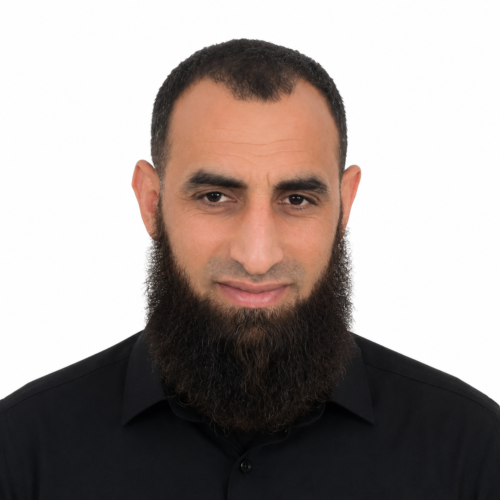
Sheikh Abdelrahman El-Sayed Abu El-Ata
Chairman of the Board
Sheikh Abdelrahman El-Sayed Abu El-Ata is the Founder and Chairman of the Board of Wahion Youha Academy, with 21 years of experience in Quranic and Islamic education.
View Teacher Profile
Sheikh Azeez Mohammed Hassan Zena
Senior Quran & Tajweed Instructor
Sheikh Azeez Mohammed Hassan Zena has 16 years of experience teaching the Holy Quran. He began teaching at Al-Azhar Al-Sharif in 2006 and started teaching Quran online in 2010, gaining extensive experience in both traditional and online Quran education. He…
View Teacher Profile
Sheikh Mohammed Said Abbas
Tajweed Instructor
Sheikh Mohammed Said Abbas is a Tajweed instructor with more than two years of experience teaching Noor Al-Bayan, Tajweed, and the Holy Quran. He is a student of Quranic readings at Al-Azhar University, where he focuses on the study and…
View Teacher Profile
Teacher Nafesa Hamada Khedr
Quran & Tajweed Tutor
Nafesa Hamada Khedr is a dedicated Quran and Tajweed tutor who focuses on providing personalized Quranic education based on each student's individual needs and learning style. She teaches both Arabic- and English-speaking students and offers a range of Quran, Tajweed,…
View Teacher Profile
Ustadha Eman Mahmoud Tawfik
Quran & Tajweed Instructor
Eman Mahmoud Tawfik is a dedicated Quran and Tajweed teacher with 10 years of teaching experience. She holds a Bachelor’s degree in Specific Education and an Ijazah in the Holy Quran with the narration of Hafs ‘an Asim, in addition…
View Teacher Profile
Ustadha Iman Ibrahim Abdel Latif El-Saadawy
Quran, Qira'at & Islamic Studies Teacher
Ustadha Iman Ibrahim Abdel Latif El-Saadawy is an experienced Quran and Qira'at teacher with 16 years of teaching experience. She specializes in teaching the Holy Quran, Quranic recitations, and Islamic studies. She has studied at a Qira'at Institute, specializing in…
View Teacher Profile
Ustadha Manar Mosaad Abdulhakeem
Arabic Tutor | Islamic Studies & Qur’an Teacher
Ustadha Manar Mosaad Abdulhakeem At-Tantawy is an Arabic tutor, Islamic Studies teacher, and Qur’an instructor with 6 years of teaching experience. She specializes in teaching Arabic, Islamic Studies, Qur’an recitation, and Tajweed to both children and adults. She holds a…
View Teacher ProfileFAQs
The course provides an introduction to selected Usul Al-Fiqh principles relevant to understanding Fiqh. A more specialized study of Usul Al-Fiqh can be offered as a separate advanced program.
Yes. The course introduces students to selected Quranic and Prophetic evidence and explains how scholars use evidence when studying Fiqh issues.
Yes. Students are introduced to the four Sunni schools and learn how to understand selected differences of opinion in a respectful and structured manner.
Not necessarily. Students with sufficient prior knowledge may take an initial assessment to determine whether the Intermediate level is appropriate.
Students who have completed the Beginner Fiqh level or who have equivalent foundational knowledge can join the course.