A free trial lesson is available to assess the student’s Quran reading and recitation level, meet the teacher, and develop an initial learning plan tailored to the student’s needs.
Intermediate
اللغة العربية – المستوى المتوسط
Arabic Language Course I Intermediate
Arabic Courses
A structured Arabic language program designed for students who already have a basic foundation in Arabic and want to develop stronger skills in speaking, listening, reading, writing, vocabulary, and grammar. The Intermediate Arabic Course focuses on using Arabic more independently in everyday situations while developing the ability to form longer sentences and paragraphs, understand conversations and written texts, express ideas and opinions, and apply Arabic grammar naturally in communication. The course also introduces selected vocabulary and expressions commonly found in Quranic and Islamic contexts, providing a useful foundation for students who wish to deepen their understanding of Arabic used in the Quran and Islamic studies. Lessons are delivered through personalized one-to-one online sessions and adapted to each student's level, goals, and learning pace.
4.6 (184)
597
8-10 Months
2-3 sessions/week
45:60
All Time Zones
Certified Teacher
Female Option Available
All Time Zones
Intermediate Arabic Language Course – Certificate
What You Will Learn
- Hold conversations in Arabic in a variety of everyday situations.
- Express ideas, opinions, and preferences more clearly.
- Understand intermediate-level Arabic conversations.
- Read and understand medium-length Arabic texts.
- Identify main ideas and important details in written texts.
- Write connected Arabic sentences and short paragraphs.
- Use Arabic vocabulary more accurately and effectively.
- Apply intermediate Arabic grammar in speaking and writing.
- Use basic Arabic verb tenses correctly.
- Distinguish between nominal and verbal sentence structures.
- Use linking words to connect ideas and create more coherent speech and writing.
- Ask and answer questions in greater detail.
- Describe people, places, events, and personal experiences.
- Understand a wider range of Quranic and Islamic vocabulary.
- Communicate in Arabic with greater independence and confidence.
- Build the skills required to progress to Advanced Arabic.
Who This Course Is For
- Students who have completed a Beginner Arabic course.
- Students with a good foundation in Arabic reading and writing.
- Adults who want to improve their Arabic speaking skills.
- Students who want to strengthen their listening and comprehension skills.
- Learners who want to read more challenging Arabic texts.
- Quran students who want to deepen their understanding of Arabic vocabulary and structures.
- Students preparing for more advanced Quranic Arabic studies.
- Anyone who wants to progress from basic Arabic knowledge to more independent communication.
Prerequisites
- Students should preferably be able to:
- Read Arabic words and simple sentences with reasonable fluency.
- Write basic Arabic sentences.
- Understand common Arabic vocabulary and expressions.
- Participate in simple Arabic conversations.
- Demonstrate basic knowledge of essential Arabic grammar.
- Completion of the Beginner level at the academy is not required if the student already has the necessary skills. An initial assessment can be used to determine whether the student is ready for the Intermediate level.
Certificate
- Intermediate Arabic Language Course – Certificate of Completion
- The certificate confirms successful completion of the Intermediate Arabic program and readiness to progress to the Advanced Arabic Level.
- Important: This is a course completion certificate and is not an academic degree or formal language qualification.
Course Details
8-10 Months
Duration
2-3
Sessions/Week
45:60
Session Length
Intermediate
Level
Explore More Courses
View all
Course Curriculum
10 modules · 59 lessons- Lesson 1: Assessing Current Arabic Language Skills
- Lesson 2: Identifying Strengths and Areas for Improvement
- Lesson 3: Reviewing Essential Vocabulary and Grammar
- Lesson 4: Creating a Personalized Intermediate Arabic Learning Plan
- Lesson 1: Talking About Everyday Life
- Lesson 2: Expressing Opinions and Preferences
- Lesson 3: Describing People and Places
- Lesson 4: Talking About Experiences and Events
- Lesson 5: Participating in Intermediate-Level Conversations
- Lesson 1: Everyday Life Vocabulary
- Lesson 2: Work and Education Vocabulary
- Lesson 3: Travel and Community Vocabulary
- Lesson 4: Descriptive Adjectives and Expressions
- Lesson 5: Synonyms and Antonyms
- Lesson 6: Using Vocabulary in Different Contexts
- Lesson 1: Reviewing Personal Pronouns and Demonstratives
- Lesson 2: Masculine, Feminine, Singular, and Plural Forms
- Lesson 3: Nominal and Verbal Sentences
- Lesson 4: Verbs in Different Tenses
- Lesson 5: Negation and Questions
- Lesson 6: Prepositions and Adverbs
- Lesson 7: Adjectives and Nouns
- Lesson 8: Possessive Structures and Idafah
- Lesson 1: Reading Intermediate Arabic Texts
- Lesson 2: Identifying the Main Idea
- Lesson 3: Extracting Information and Details
- Lesson 4: Understanding Vocabulary from Context
- Lesson 5: Analyzing Sentence Structures
- Lesson 6: Discussing Texts and Expressing Opinions
- Lesson 1: Writing Connected Sentences
- Lesson 2: Writing Short Paragraphs
- Lesson 3: Describing People and Places
- Lesson 4: Writing Simple Messages and Notes
- Lesson 5: Writing Short Topics and Essays
- Lesson 6: Identifying Errors and Improving Writing
- Lesson 1: Listening to Everyday Conversations
- Lesson 2: Understanding Key Information from Audio
- Lesson 3: Identifying Words from Context
- Lesson 4: Listening to Intermediate-Level Dialogues
- Lesson 5: Answering Listening Comprehension Questions
- Lesson 6: Retelling Information in Arabic
- Lesson 1: Common Quranic Arabic Vocabulary
- Lesson 2: Arabic Structures Used in the Quran
- Lesson 3: Essential Vocabulary for Islamic Studies
- Lesson 4: Understanding Islamic Expressions
- Lesson 5: Connecting Vocabulary with Context and Meaning
- Lesson 6: Reading Simplified Islamic Texts
- Lesson 1: Communicating in Everyday Situations
- Lesson 2: Arabic for Work and Education
- Lesson 3: Travel and Asking for Information
- Lesson 4: Interviews and Extended Conversations
- Lesson 5: Expressing Needs and Solving Simple Problems
- Lesson 6: Guided Free Conversation Practice
- Lesson 1: Comprehensive Vocabulary Review
- Lesson 2: Review of Essential and Intermediate Grammar
- Lesson 3: Reading and Comprehension Assessment
- Lesson 4: Writing and Expression Assessment
- Lesson 5: Listening and Speaking Assessment
- Lesson 6: Final Evaluation & Preparation for Advanced Arabic
Your Course Teacher
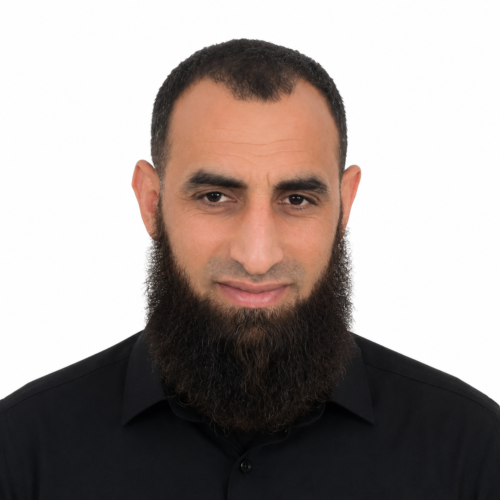
Sheikh Abdelrahman El-Sayed Abu El-Ata
Chairman of the Board
Sheikh Abdelrahman El-Sayed Abu El-Ata is the Founder and Chairman of the Board of Wahion Youha Academy, with 21 years of experience in Quranic and Islamic education.
View Teacher Profile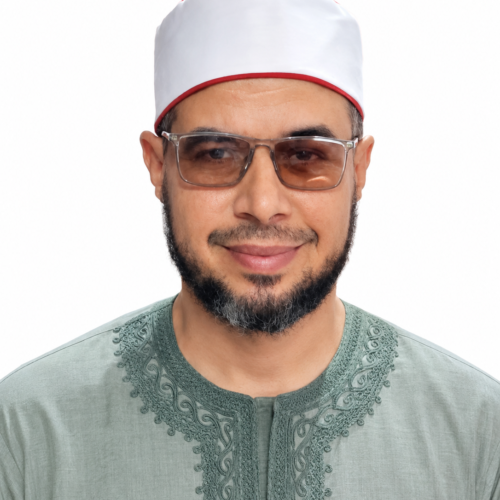
Sheikh Azeez Mohammed Hassan Zena
Senior Quran & Tajweed Instructor
Sheikh Azeez Mohammed Hassan Zena has 16 years of experience teaching the Holy Quran. He began teaching at Al-Azhar Al-Sharif in 2006 and started teaching Quran online in 2010, gaining extensive experience in both traditional and online Quran education. He…
View Teacher Profile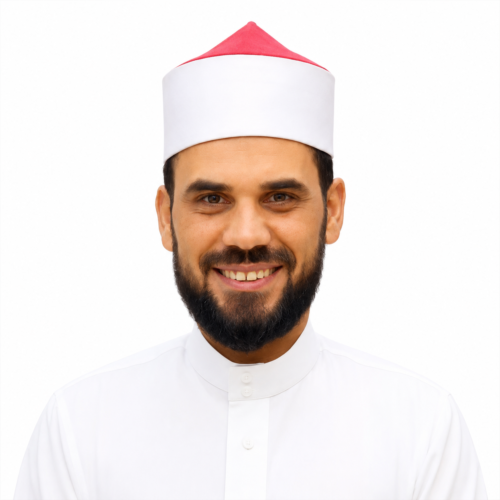
Sheikh Hussein Muhammad Ahmed
Senior Quran & Tajweed Instructor
Hussein Muhammad Ahmed graduated from Al-Azhar University in 2019 with a Bachelor's degree from the Faculty of Languages and Translation, Department of Islamic Studies. He has memorized the Holy Qur'an and holds an Ijazah in the narration of Hafs 'an…
View Teacher Profile
Ustadh Ahmed Esayed Sedeek
Quran & Tajweed Instructor
Ustadh Ahmed Esayed Sedeek is an experienced educator with a long background in teaching. He has worked as an English teacher at Al-Azhar Al-Sharif since 2010 and has also been teaching Quran memorization since 2021. He is passionate about teaching…
View Teacher Profile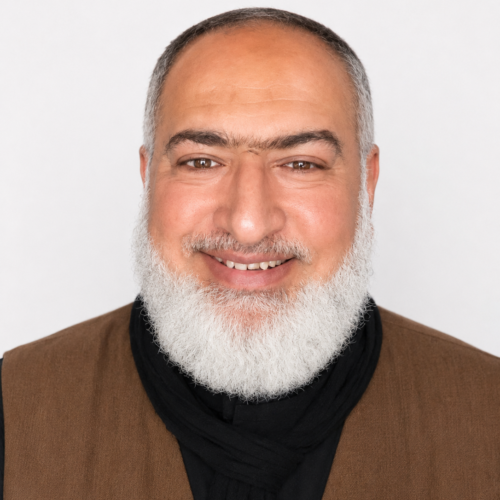
Ustadh Alsayed Mohammed Altonamly
Senior Arabic, Qur'an & Tajweed Instructor
Ustadh Alsayed Mohammed Altonamly is an experienced Arabic, Qur'an, and Tajweed instructor with approximately 25 years of teaching experience. He graduated from the Faculty of Dar Al Uloom at Cairo University, Fayoum Branch, where Arabic Language and Islamic Sciences formed…
View Teacher Profile
Ustadha Amany Mostafa Yuones
Quran & Tajweed Teacher
Ustadha Amany Mostafa Yuones is a dedicated Quran and Tajweed teacher with 7 years of teaching experience, including 3 years of practical experience working at a specialized Quran memorization center. She graduated from the Faculty of Education and holds an…
View Teacher Profile
Ustadha Asmaa Elsayed Abdelaal Ghander
Quran & Tajweed Instructor | Noor Al-Bayan & Quran Reading Teacher
Ustadha Asmaa Elsayed Abdelaal Ghander is a Quran teacher with 6 years of teaching experience. She started teaching the Quran online in 2020 and has been teaching with Wahion Youha Academy since 2022. She teaches Quran reading, Noor Al-Bayan, Tajweed…
View Teacher Profile
Ustadha Lamiaa Abdelfattah Mohamed
Senior Quran & Tajweed Instructor
Ustadha Lamiaa Abdelfattah Mohamed Gamil is a Senior Quran & Tajweed Instructor with 10 years of successful online teaching experience. She combines her academic background with a deep and lifelong connection to the Holy Quran. She graduated with a Bachelor's…
View Teacher Profile
Ustadha Manal Ahmed Mostafa Salama
Quran & Arabic Language Supervisor and Teacher
Ustadha Manal Ahmed Mostafa Salama is a Quran and Arabic language teacher and supervisor with 11 years of teaching experience, specializing in Quran education and Arabic for non-Arabic speakers. She holds a Master’s Degree in Arabic Language Curriculum and Teaching…
View Teacher ProfileFAQs
Yes. Students practice reading intermediate-level texts and writing connected sentences, paragraphs, and short compositions.
Yes. The course introduces intermediate grammar concepts while emphasizing practical application in speaking and writing, rather than focusing only on theoretical grammar.
Yes. The Intermediate level places greater emphasis on practical communication, expressing ideas and opinions, and participating in longer and more varied conversations.
Not necessarily. Students who already have the required skills can take an initial assessment to determine whether they are ready for the Intermediate level.
It is designed for students who have a good foundation in Arabic and can already read and write simple sentences and participate in basic conversations